Tap where the ball died.
One tap says who won the rally, who lost it, whether it was a winner or an error, and where. It works with no signal, and the score is called for you.
How scoring works →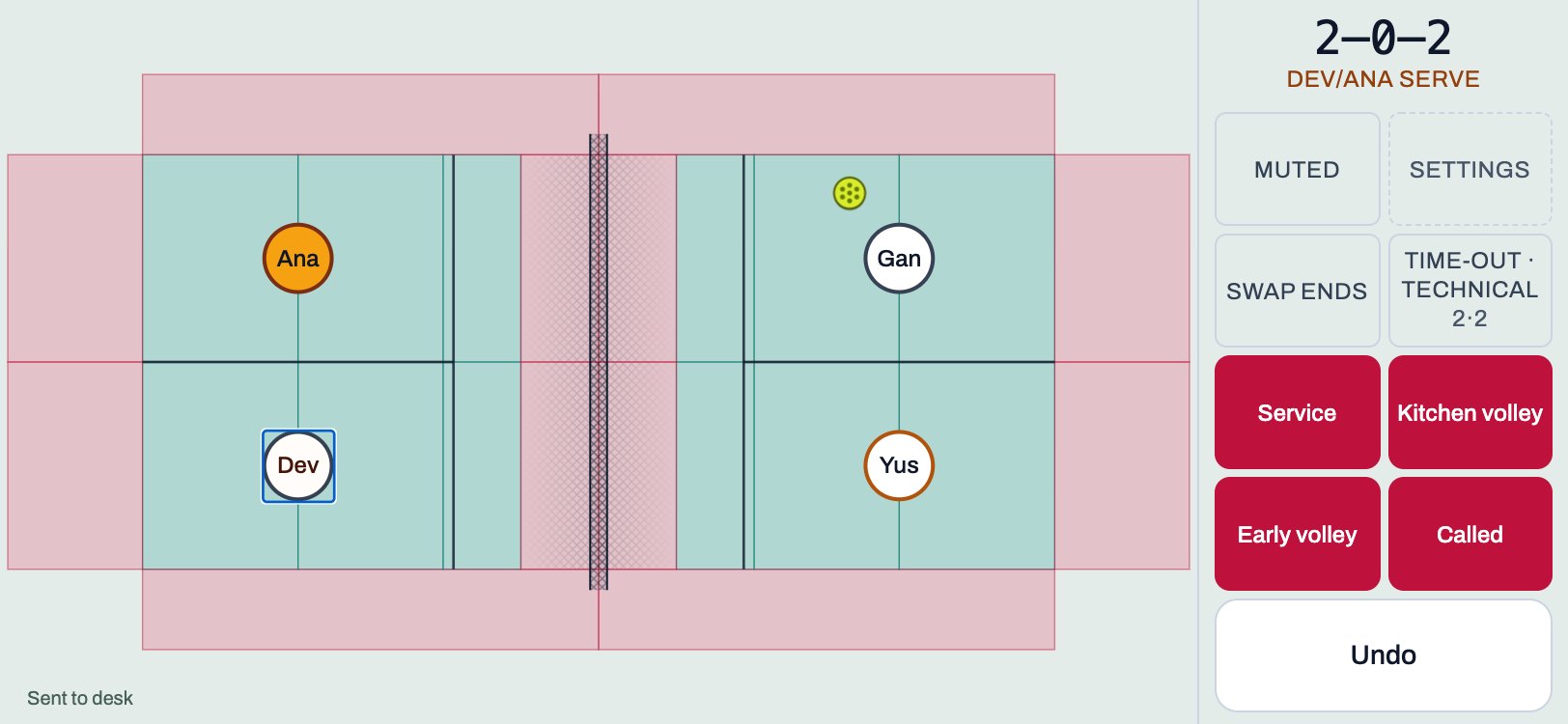
Pickleball scoring and analytics
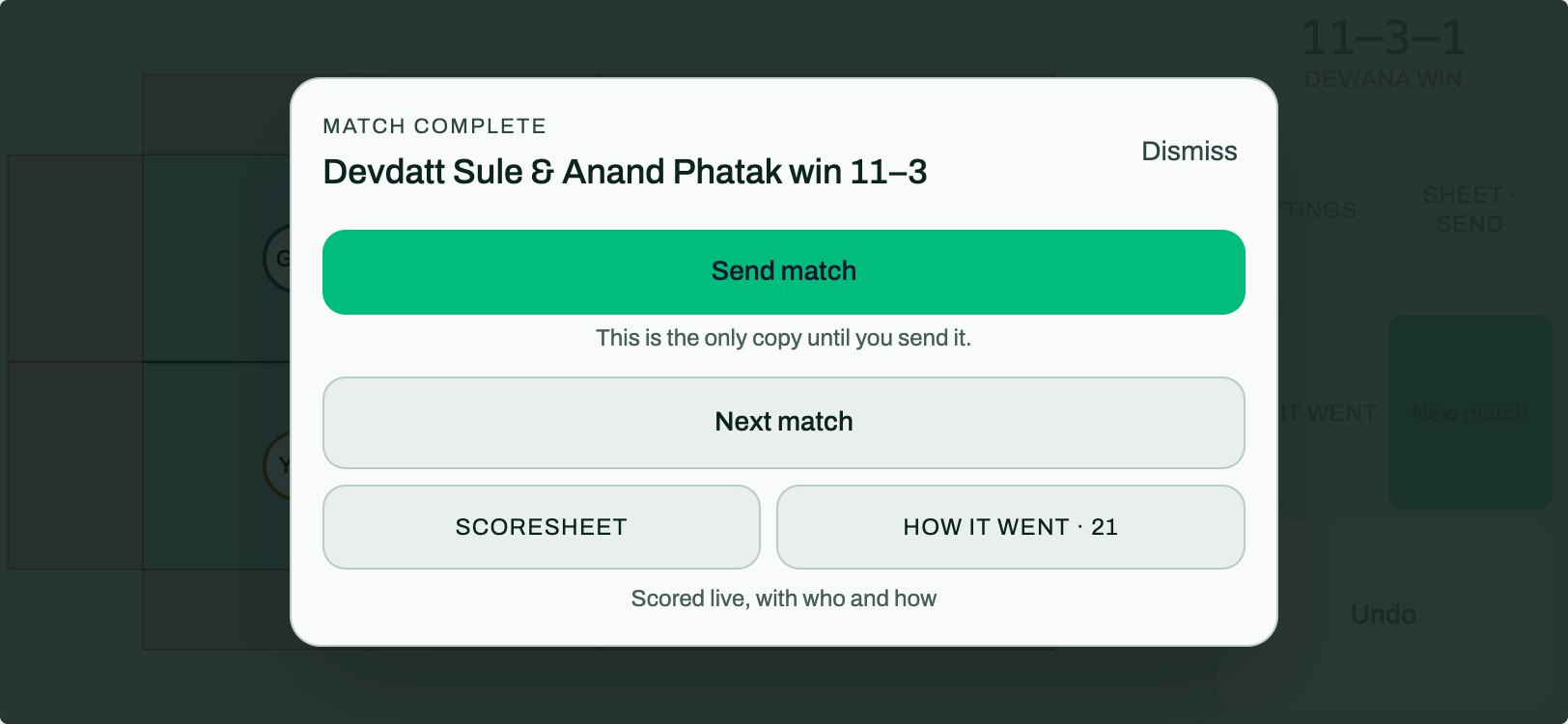
One tap on the court records the score and the story: where every rally ended, who ended it, and how.
A pickleball scoring app for players, coaches and associations. It runs on your phone.
Every match says how it was recorded
One tap, the whole story
One tap says who won the rally, who lost it, whether it was a winner or an error, and where. It works with no signal, and the score is called for you.
How scoring works →
Score only, add where, or name who hit it and the shot. Every point is a complete record at any depth, and nothing is locked behind a plan.
The three depths →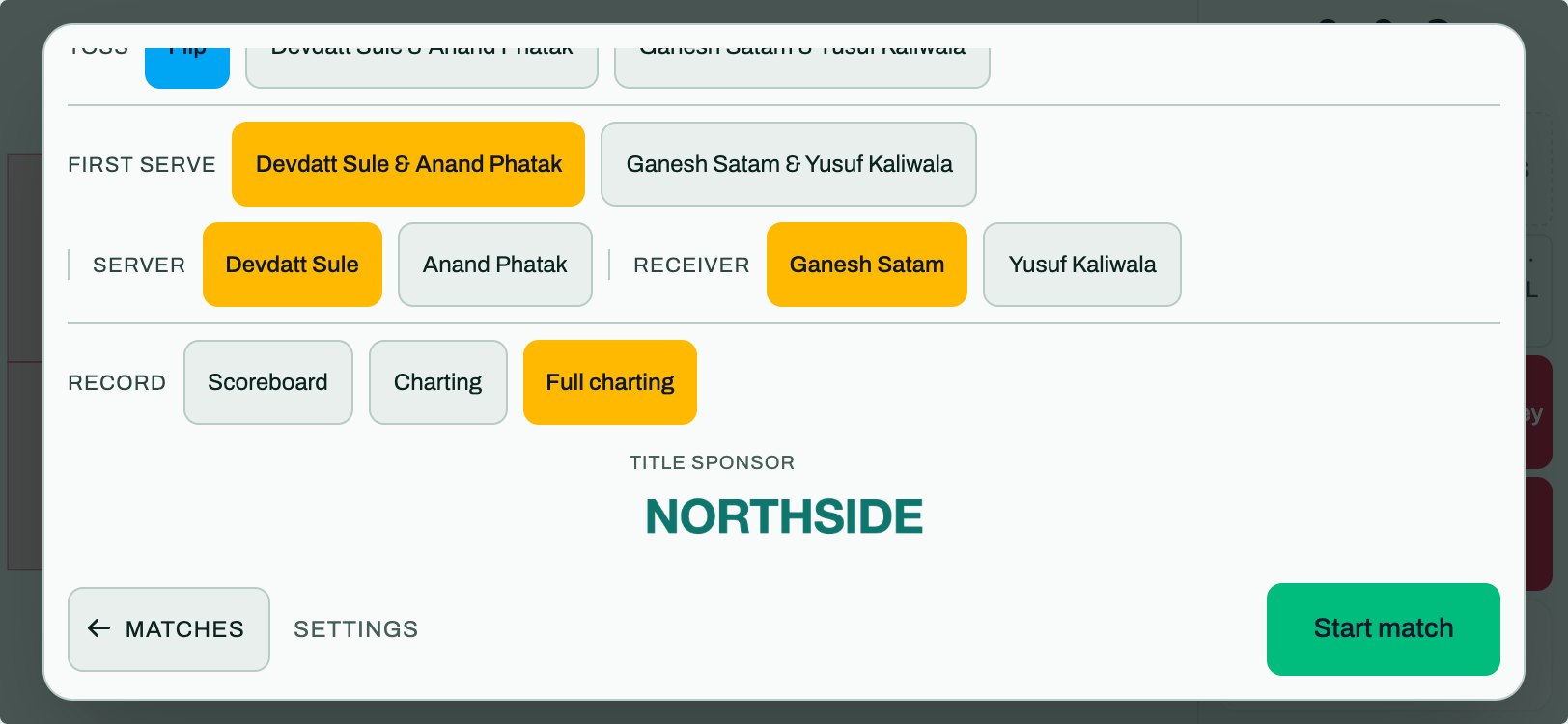
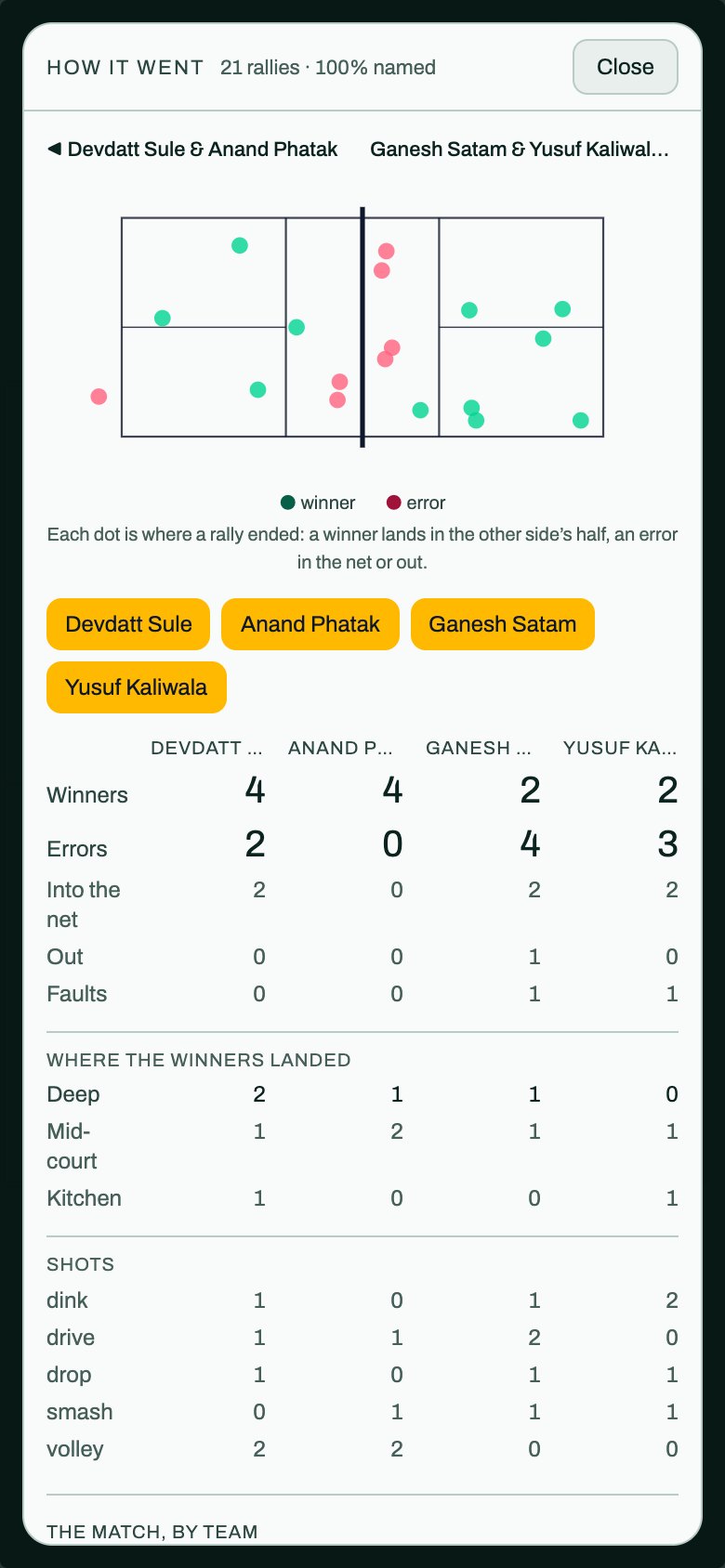
Winners and errors by player, where the winners landed, the shots, the longest run, and who held serve. Pick two players and put them side by side.
Reading the analysis →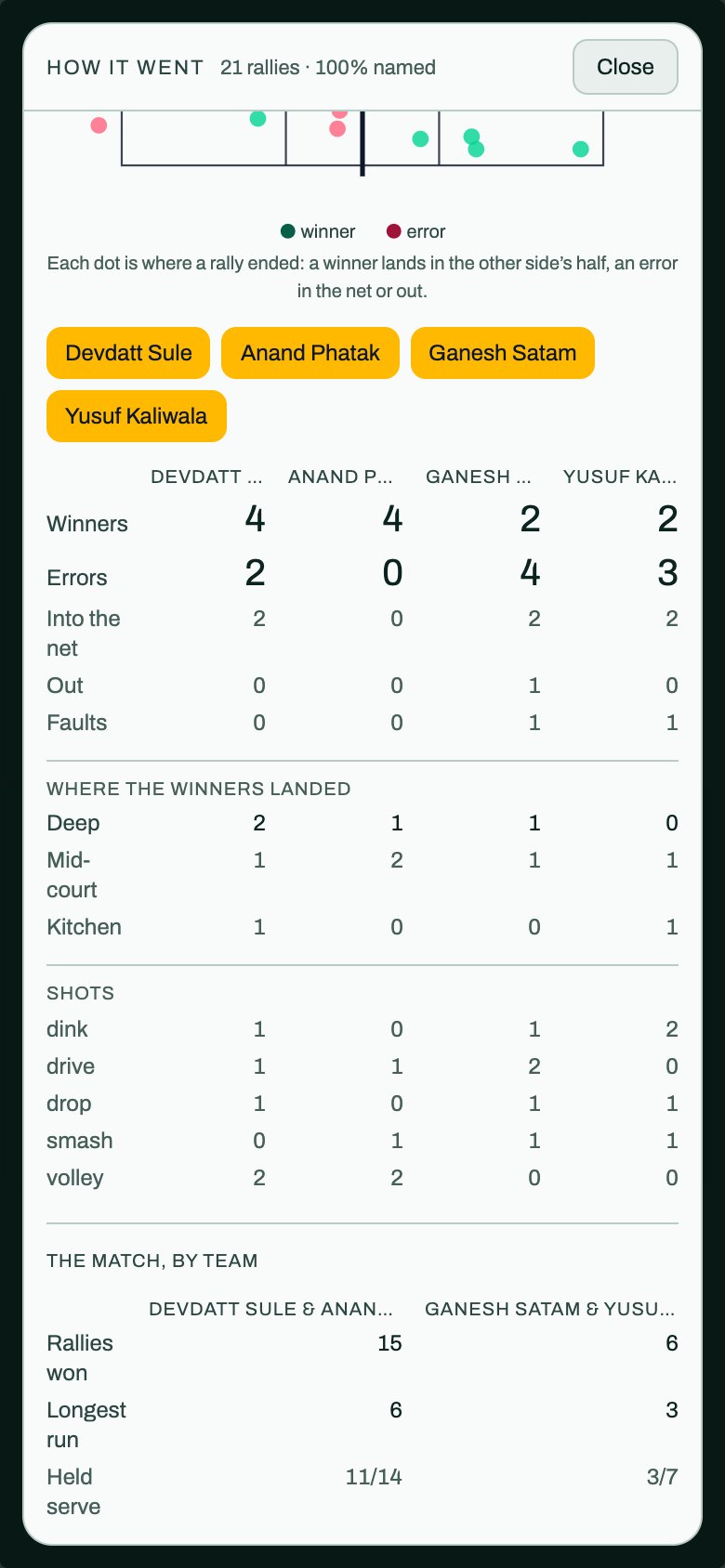
Step through the match one point at a time and fill in who and how long after. It tells you how much of the match it has: where, who and how.
What Review does →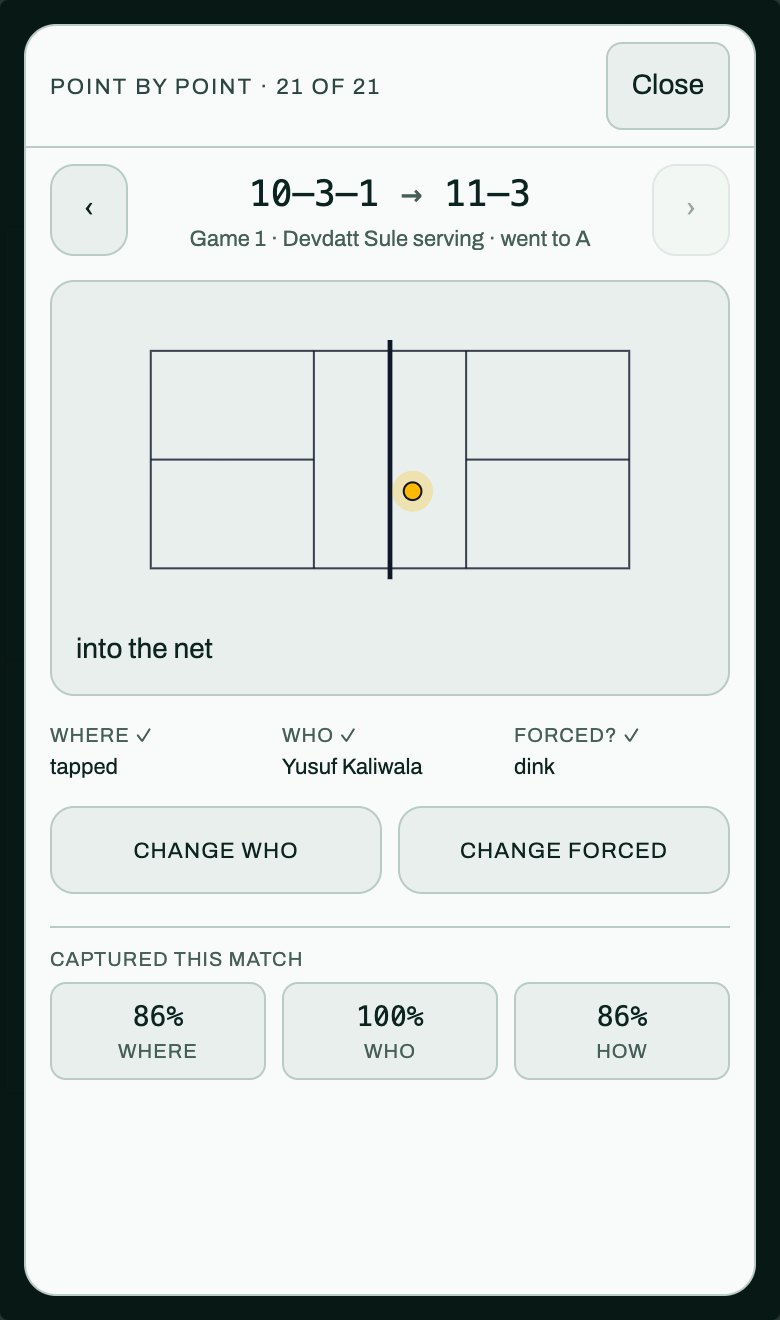
The whole point-by-point record, to send, print or take away as a CSV, and it says how the match was recorded at the top.
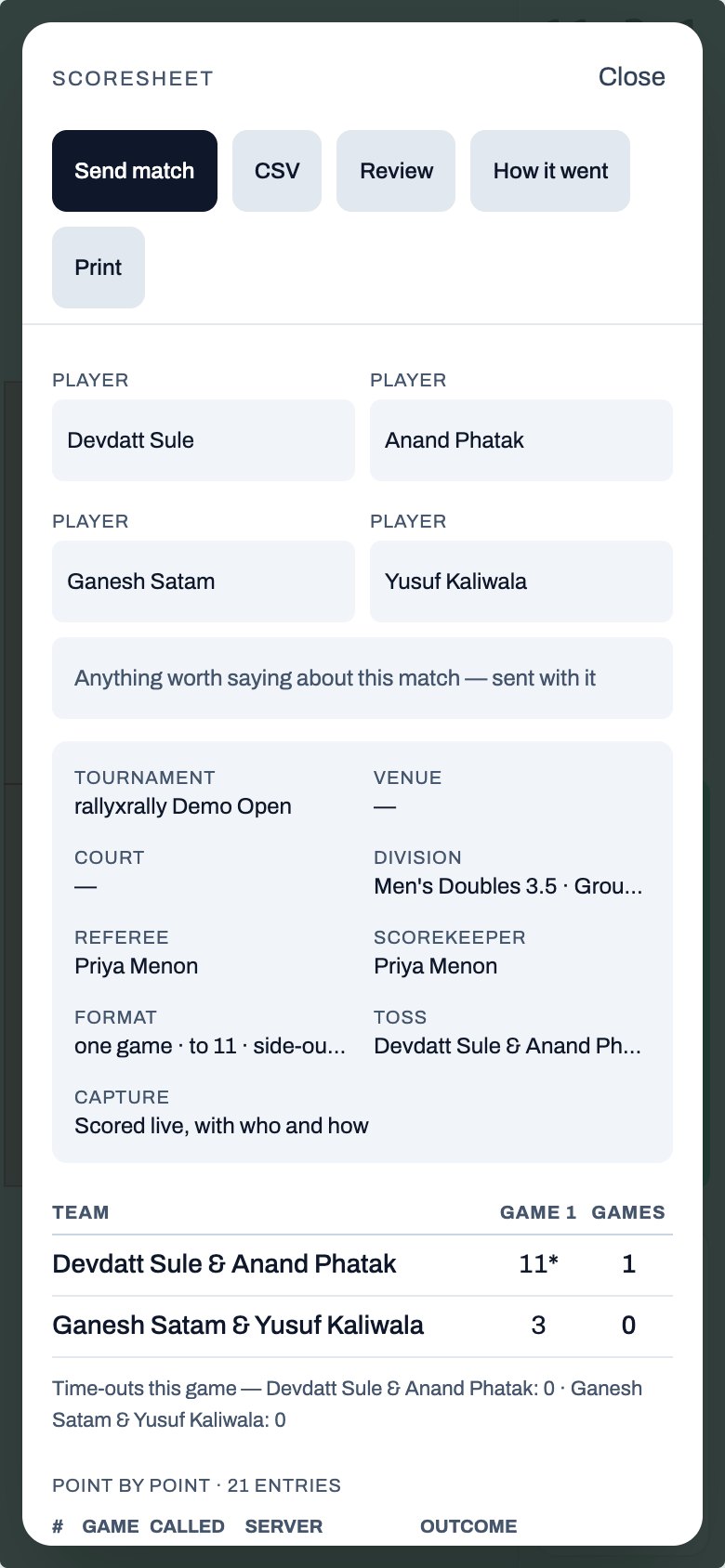
Every screen on this page is the real app, showing a sample match with invented players.
Numbers you can believe
A heat map drawn from taps that were counting a score off paper shows where a finger went, not where a ball did. So rallyxrally says how each match arrived, and draws only what it can stand behind.
| Scored live, with who and how | The court, every player, the shots and the team view. |
|---|---|
| Scored live, score only | The score and the team view. No heat map: no place was recorded. |
| Typed up after play | The score and the result. Nothing about runs or momentum: entry order is not play order. |
Type a question about your game, in your own words. Get a picture and one sentence that tells you what changed.
61% of your serves won the point tonight. Your last 10 average 54%. Your best night since March.
You led 8–4, then lost seven points in a row.
Yes. You win 63% of points from the left and 49% from the right. The gap is on return, not on serve.
A concept, with sample numbers. Every figure will come from a tested calculation over the match record, never from a model doing sums. When your matches were not charted live, it will say so and answer from the ones that were.
Serve, return and errors, month by month, with a verdict in one line.
A match scrubbed like a video: the runs, the droughts, the turn.
Who covers what in doubles, and where the gap opens.
Every student on one screen. Those moving most come to the top.
The fingerprint of your game, as a card you can share.
"First-serve points to 60%." A ring that fills, match by match.
Later: a season in review, made to post.
Where it happens
For organizers, associations and broadcasters: the same tap runs the whole event, so nobody has to be up all night. See our pickleball tournament software, including for organizers in India.
Put a match on a court, enter a result from paper, record a walkover. The control room says when a court has gone quiet.
How the desk works →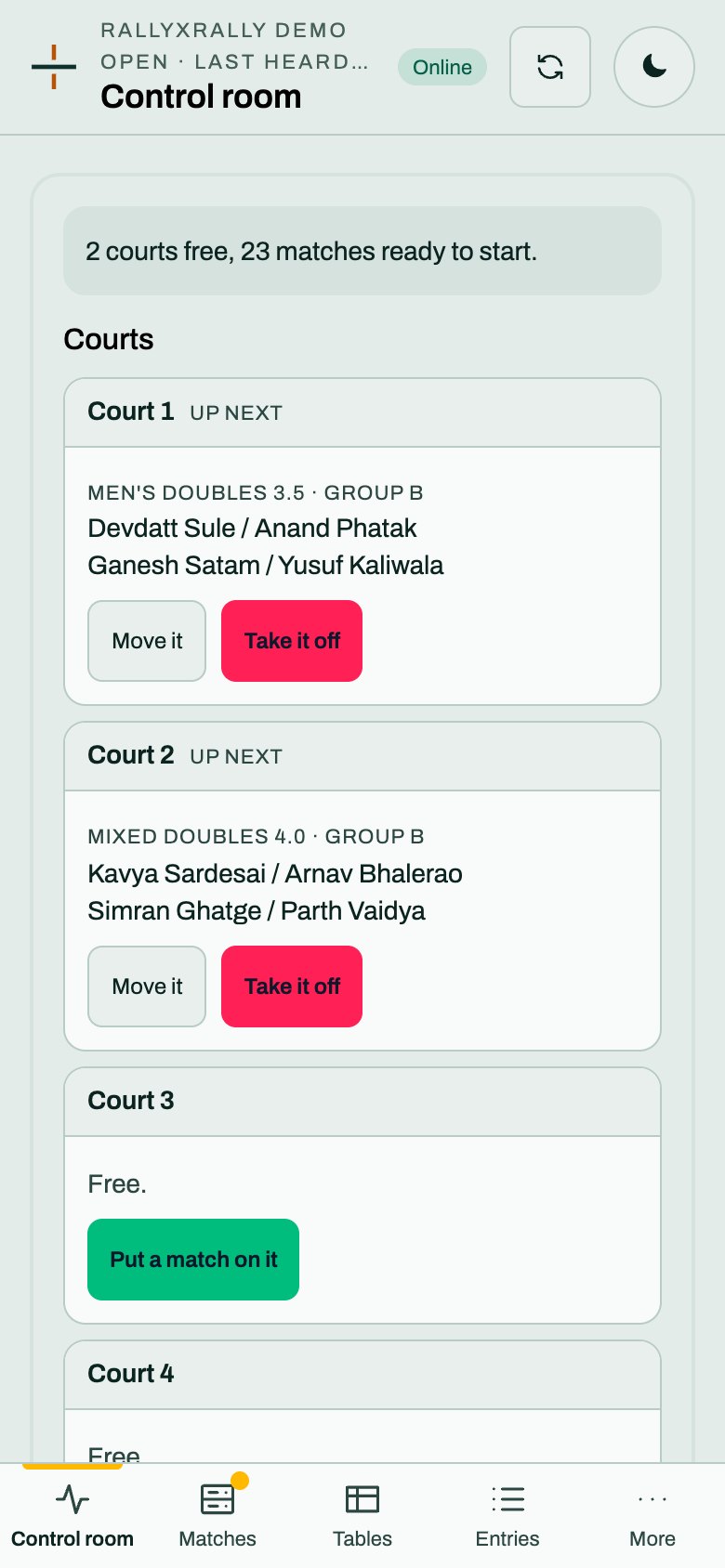
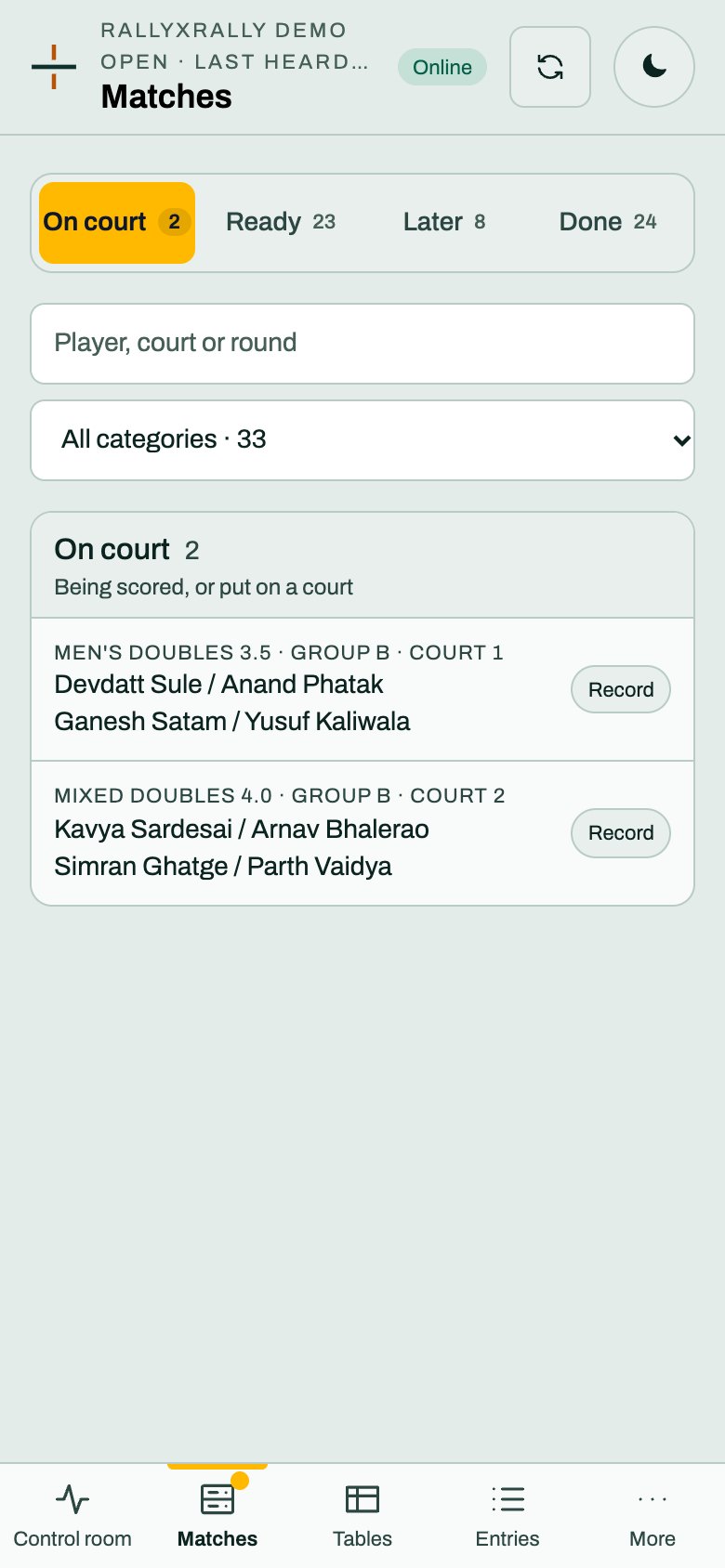
Players and parents open a link: what is on court now, the draw, the tables, the results. No sign-in, and nobody tracked.
What they see →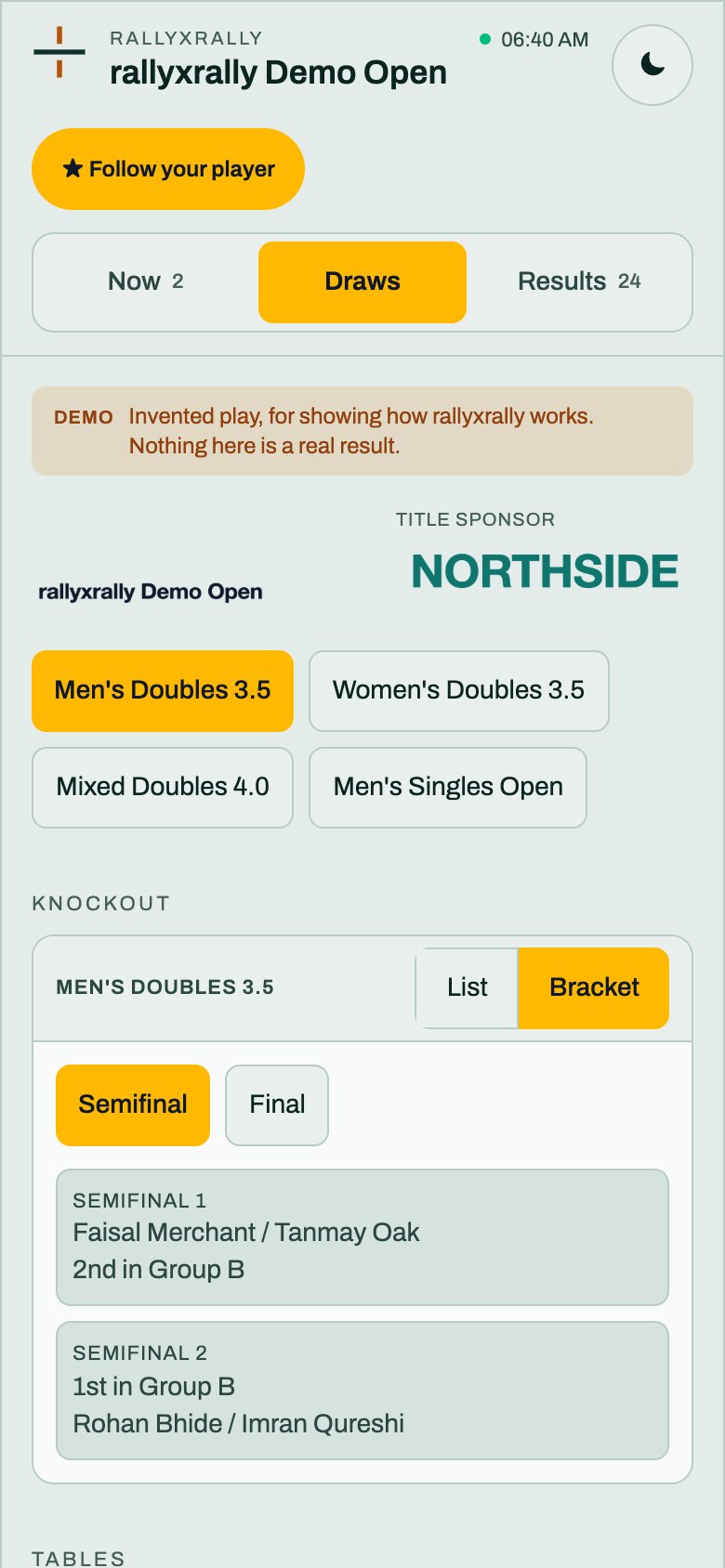
A score bug for OBS, and a data feed for vMix, with the score called as the referee calls it, and who is serving.
For broadcasters →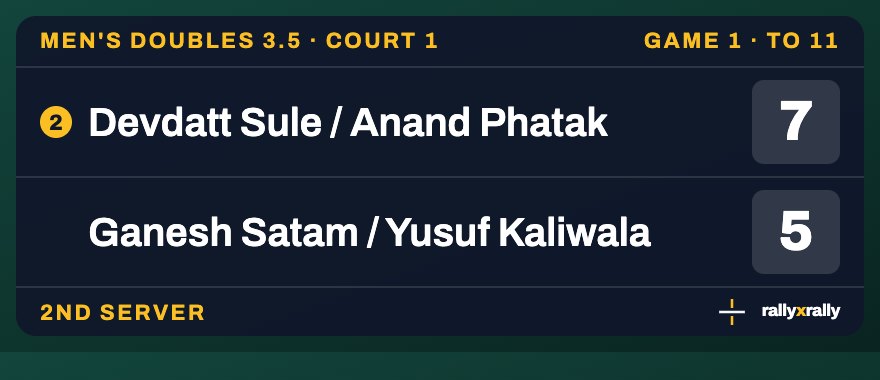
Sample data, to show the page.
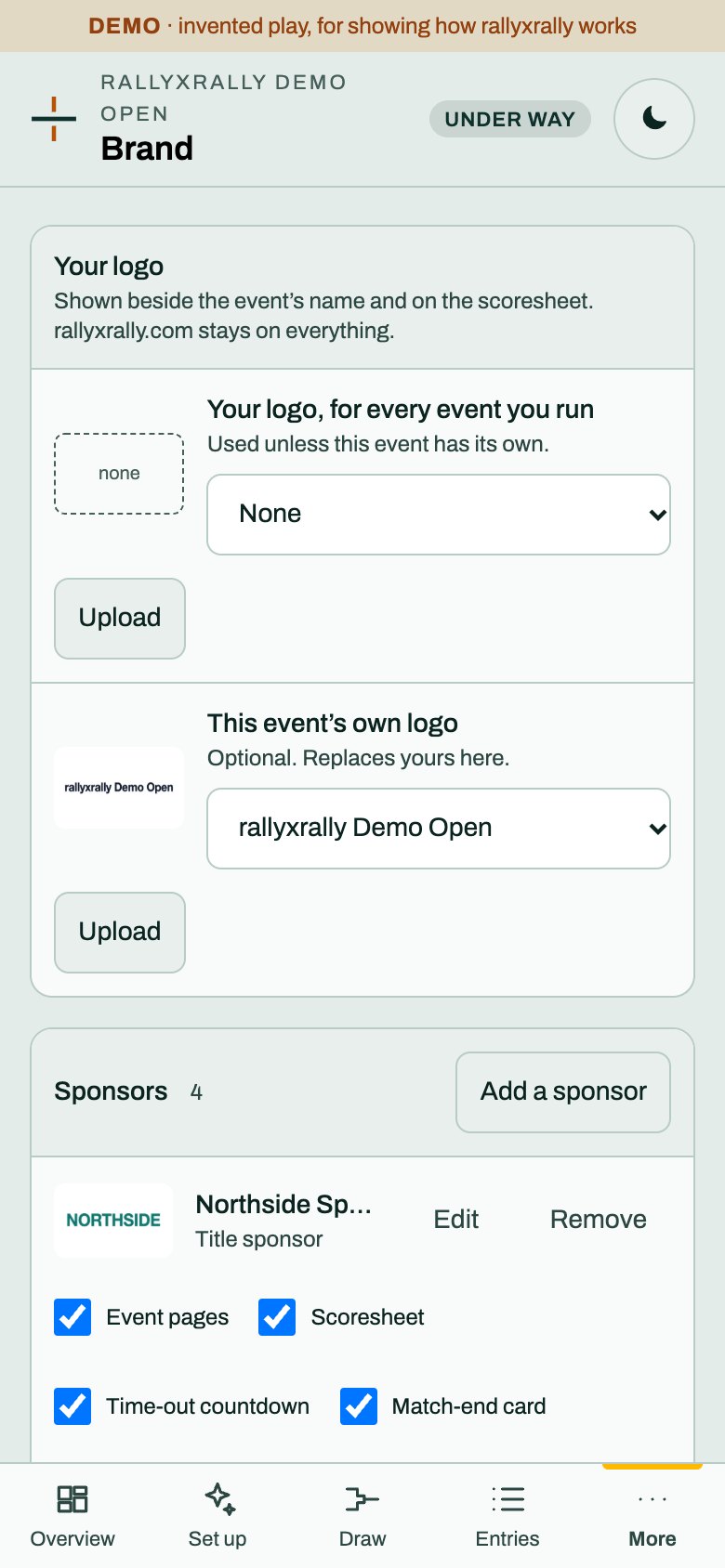
Put your logo and your sponsors on the event page, the scoresheet and the referee's time-out clock, each tagged as you like. Then send each one a report of what was counted, with a line saying what the numbers cannot tell them.
Logos and sponsors →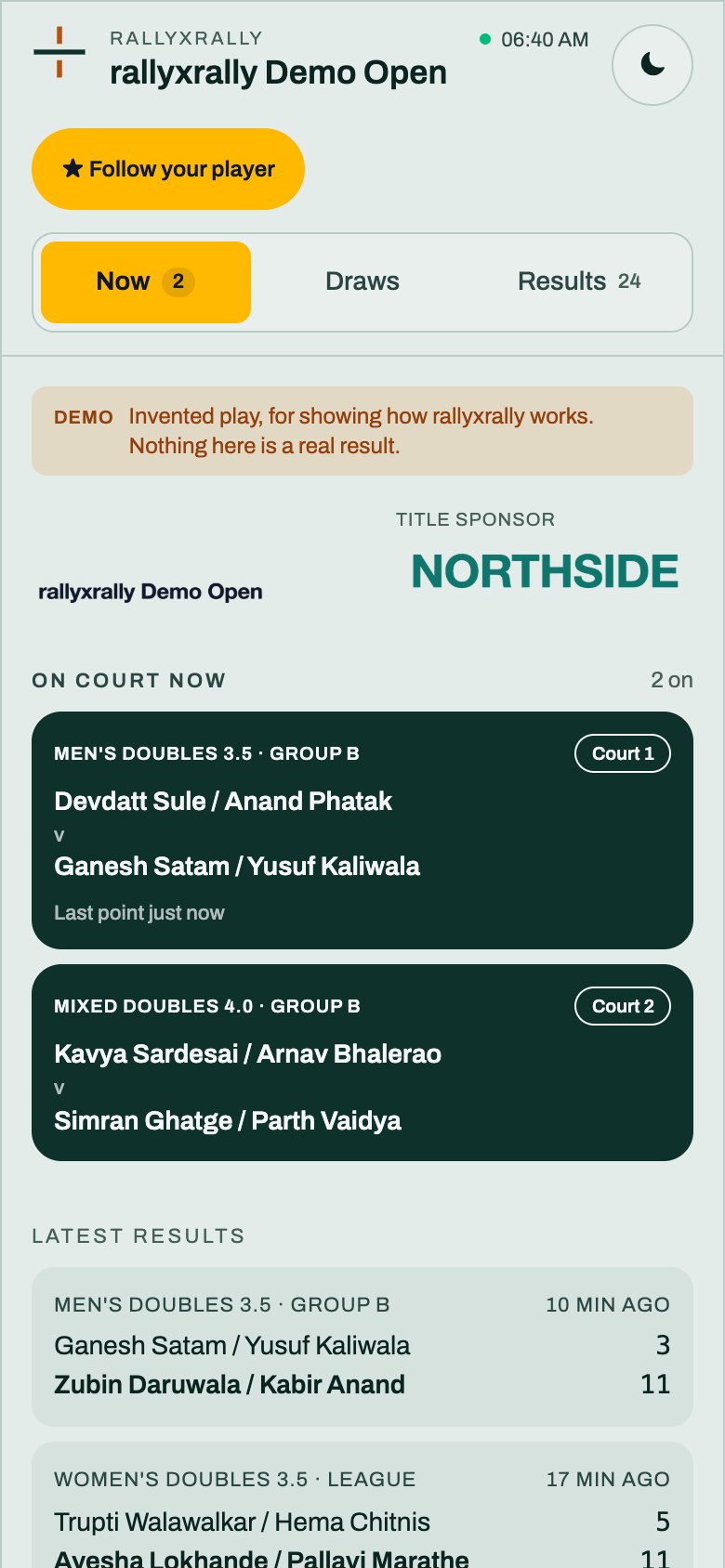
Invented sponsors, to show the page.
Who it is for
Read how a match went, and review it point by point.
Name your event, build the draw, hand out codes, publish.
Courts, results, walkovers and tables, on the day.
Tap where the ball died. One page to print.
Follow the scores from a link. Nothing to install.
A score bug for OBS and a feed for vMix.
An event, from empty to played
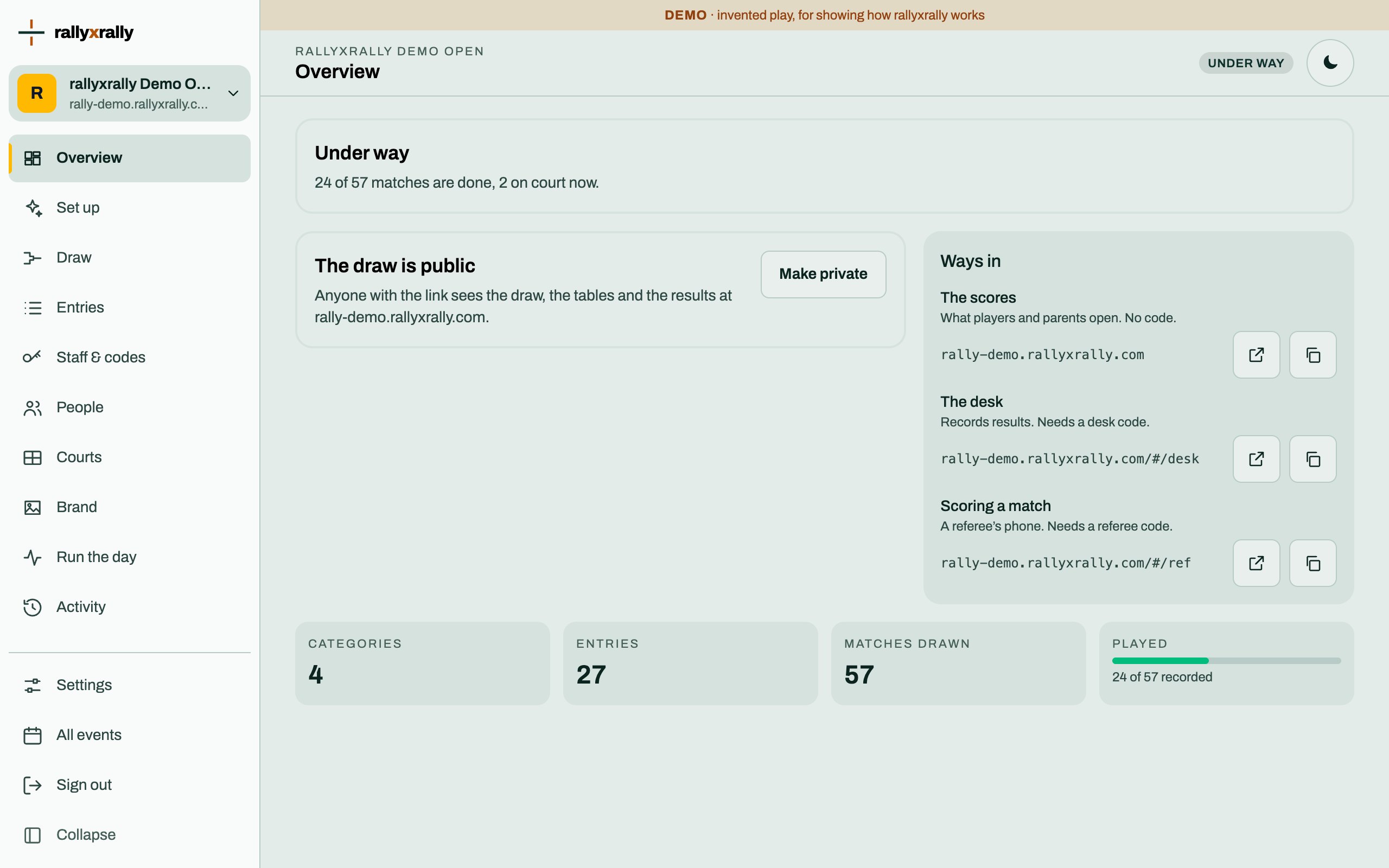
The organizer's overview of a demo event, with invented players.
Built for the real day
A whole match is scored offline and uploads when there is signal again.
A result typed in after play is marked as that. Nothing claims more than it knows.
Names belong to the event. Nothing is sold, no ads, and spectators are not tracked. Privacy
Every change is in an activity log, and support sees only what you allow.
New here?
Scoring and analytics for pickleball. You record each rally on a phone, and it shows you how the match went. When a tournament runs on it, the draw, the tables, the desk and the public page follow from the same taps.
To score a game on your own phone, no. Organizers sign in with Google. Referees and the desk use a code the organizer gives them. Players and parents following a tournament need nothing: they open a link.
Scoring a game on your own phone is free. Organizer pricing is not published yet, and nothing is charged today.
At two tournaments in Pune in September 2026, run by the people who made it with the organizers who asked for it.
Everything on this page is a sample with invented players. Nothing in it is a real result.